Shrimp Fajita Bowl (Zesty, Colorful & Packed with Flavor)
Fajitas take a bit of coordination when you’re doing the whole tortilla-and-toppings setup, and honestly, most of the appeal — the seasoned protein, the charred peppers and onions, the toppings — translates perfectly well into a bowl without the extra step of wrapping anything. This version keeps everything that makes fajitas good and skips the parts that make weeknight cooking more complicated than it needs to be.
Shrimp cooks fast, which makes this one of the quicker dinners I make on busier nights. From marinating to plating, you’re realistically looking at 30 minutes, most of which is hands-off while the peppers and onions cook down.
Why Shrimp Works Well Here
Shrimp takes on a marinade quickly because of how thin and porous it is compared to chicken or beef, which means you don’t need hours of marinating to get real flavor into it. It also cooks in just a couple of minutes per side, so the whole dish comes together fast once the vegetables are ready. The main risk is overcooking it — shrimp goes from perfectly tender to rubbery in a short window, so timing matters more here than with most proteins.
Ingredients
Shrimp marinade
- 1 lb shrimp, peeled and deveined
- 2 tablespoons olive oil
- 1 tablespoon lime juice
- 1 teaspoon ground cumin
- 1 teaspoon chili powder
- ½ teaspoon garlic powder
- Salt and black pepper, to taste
Vegetables
- 1 red bell pepper, sliced
- 1 green bell pepper, sliced
- 1 yellow onion, sliced
- 1 tablespoon olive oil
Bowl base and toppings
- 2 cups cooked rice
- 1 cup black beans, drained and rinsed
- 1 avocado, sliced
- ½ cup shredded cheese
- ¼ cup sour cream
- Salsa, to taste
- Lime wedges, for serving
How to Make It
Marinate the shrimp. Combine the olive oil, lime juice, cumin, chili powder, garlic powder, salt, and pepper in a bowl. Add the shrimp and toss to coat. Let sit for 15-20 minutes — shrimp doesn’t need long, and marinating much beyond 30 minutes can start to affect the texture due to the acid in the lime juice.
Cook the vegetables. Heat the olive oil in a large skillet or cast-iron pan over medium-high heat. Add the sliced peppers and onion, cooking for 6-8 minutes, stirring occasionally, until they’re softened with some char developing on the edges. Remove from the pan and set aside.
Cook the shrimp. In the same pan, add the marinated shrimp in a single layer. Cook for about 2 minutes per side, until they turn pink and opaque throughout. Don’t walk away during this step — shrimp overcooks quickly and the difference between perfect and rubbery is often less than a minute.
Warm the beans. A couple of minutes in a small pan or the microwave is enough to take the chill off without needing to fully cook them further.
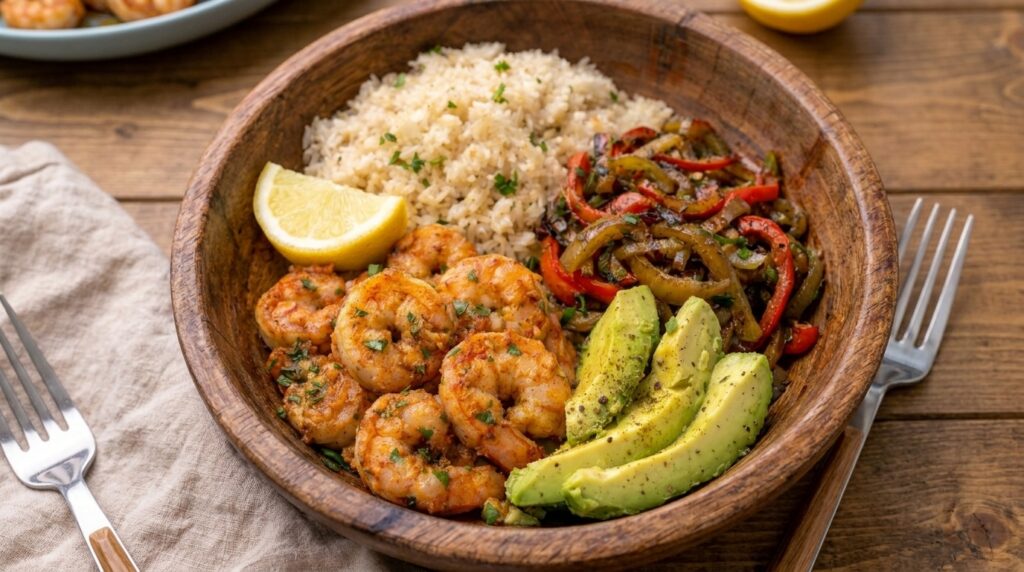
Assemble the bowls. Start with rice as the base, then add the black beans, peppers and onions, and shrimp. Top with avocado slices, shredded cheese, a spoonful of sour cream, and salsa to taste.
Finish with lime. A fresh squeeze of lime juice over the top right before eating brightens the whole bowl and ties the flavors together.
Common Questions I Get Asked About This One
Can I use frozen shrimp? Yes, just make sure it’s fully thawed and patted dry before marinating. Excess water from thawing dilutes the marinade and can make it harder to get a good sear on the shrimp.
What size shrimp works best? Medium to large shrimp hold up best here — very small shrimp overcook almost instantly and are easy to lose track of, while jumbo shrimp take a bit longer per side but give you more substantial bites.
Can I swap in chicken or steak instead of shrimp? Absolutely, the same marinade works well on either. Chicken needs longer cooking time (5-7 minutes per side, depending on thickness), and steak should rest for a few minutes after cooking before slicing.
Is this good for meal prep? It holds up reasonably well for 2-3 days, though shrimp specifically doesn’t reheat quite as well as chicken or steak — it toughens slightly. If meal prepping, consider slightly undercooking the shrimp initially, since it will finish cooking a bit more during reheating.
How do I make this less spicy for kids or sensitive palates? Reduce or omit the chili powder in the marinade, and skip any hot salsa in favor of a milder version. The cumin and lime still carry plenty of flavor on their own.
A Few Things I’ve Learned Making This Often
Pat the shrimp dry before marinating. Excess moisture prevents a good sear and keeps the shrimp from developing any color, leaving them looking pale and steamed rather than lightly charred.
Cook the vegetables first and set them aside rather than trying to cook everything together in the same pan at once. Shrimp and vegetables cook at different rates, and keeping them separate until assembly lets each one turn out right.
A cast-iron skillet, if you have one, gets a better char on the peppers and onions than a nonstick pan typically will, closer to what you’d get from a grill.
Don’t skip the resting step for the shrimp after cooking, even if it’s brief. A minute or two off the heat lets the juices settle rather than running out the moment you cut or bite into one.
What to Pair It With
This bowl is a full meal on its own, though warm tortillas on the side turn it into more of a build-your-own fajita experience if you want that option available. Tortilla chips and extra guacamole work well too if you’re serving this for a group.
Storage
Keeps in an airtight container in the fridge for up to 3 days, with fresh toppings like avocado and sour cream added just before eating rather than stored in with the rest. Reheat the rice, shrimp, and vegetables gently in a pan or microwave, being careful not to overcook the shrimp further during reheating.
If you’ve swapped in a different protein or topping combination, I’d like to hear how it turned out.