Mediterranean Baked Fish (Easy, Flavor-Packed & Genuinely Simple)
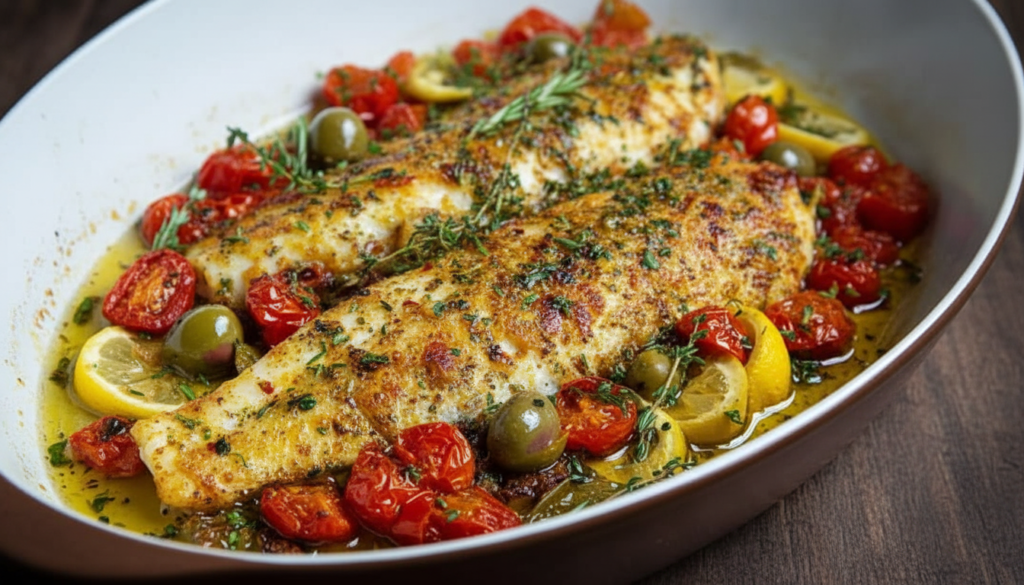
This is the recipe I come back to when I want fish for dinner but don’t want to fuss over technique. White fish fillets baked with tomatoes, olives, capers, and a good amount of olive oil, all in one dish, with almost no active cooking time beyond the initial prep. It’s the kind of meal that looks like it took more thought than it did, mostly because the flavors of good Mediterranean pantry staples do most of the work once they’re in the oven together.
I started making this on nights when I wanted something that felt lighter than a lot of other dinners in my regular rotation, without landing on something bland or boring in the process. Baking the fish directly in a tomato-olive mixture solves that — the fish stays moist from the surrounding sauce, and it picks up a lot of flavor passively while it cooks, rather than needing a heavy marinade or complicated seasoning beforehand.
It’s become one of the last recipes I turn to when I want to close out a week of cooking on something reliable — few ingredients, minimal cleanup, and a flavor profile that never really gets old no matter how often I make it.
Why Baking the Fish In the Sauce Works So Well
A lot of baked fish recipes season the fish on its own and serve a sauce alongside it, but baking the fish directly in the tomato mixture means it’s essentially poaching in flavorful liquid the entire time it cooks. This keeps delicate white fish from drying out, which is a common problem with baking fish plain, and it means every bite carries some of that briny, tomato-forward flavor rather than needing you to spoon sauce over a separately cooked piece of fish.
Ingredients
- 4 white fish fillets (cod, halibut, or tilapia all work well)
- 2 tablespoons olive oil, plus more for drizzling
- 1 small onion, thinly sliced
- 3 garlic cloves, minced
- 1 can (14 oz) diced tomatoes
- ½ cup kalamata olives, pitted and halved
- 2 tablespoons capers, drained
- 1 teaspoon dried oregano
- Salt and black pepper, to taste
- Fresh parsley, chopped, for garnish
- Lemon wedges, for serving
How to Make It
Preheat the oven. Set to 400°F (200°C).
Build the sauce base. Heat the olive oil in an oven-safe skillet over medium heat. Add the sliced onion and cook for 4-5 minutes until softened, then add the garlic and cook for another minute until fragrant.
Add the tomatoes and seasonings. Stir in the diced tomatoes, olives, capers, and oregano. Season with salt and pepper, then let the mixture simmer for 5-6 minutes, until it thickens slightly.
Add the fish. Season the fish fillets lightly with salt and pepper, then nestle them into the tomato mixture, spooning some of the sauce over the top of each piece.
Bake. Transfer the skillet to the oven and bake for 12-15 minutes, depending on the thickness of the fillets, until the fish is opaque and flakes easily with a fork.
Finish and serve. Drizzle with a little extra olive oil, sprinkle with fresh parsley, and serve with lemon wedges on the side for squeezing over just before eating.
Common Questions I Get Asked About This One
What’s the best type of fish for this recipe? Any firm, mild white fish works well — cod, halibut, and tilapia are all common choices. Thicker fillets hold up slightly better in the sauce without falling apart, though thinner fillets just need a shorter bake time to avoid overcooking.
Can I use fresh tomatoes instead of canned? Yes, though you’ll want to cook them down a bit longer to get the same thickened consistency canned diced tomatoes already have. About 2 cups of fresh, diced tomatoes works as a substitute, simmered for a few extra minutes before adding the fish.
Is this dish spicy? Not as written — it’s savory and briny from the olives and capers rather than spicy. A pinch of red chili flakes added along with the oregano is an easy way to add some heat if you want it.
Can I make the sauce ahead of time? Yes, the tomato-olive base can be made up to 2 days ahead and stored in the fridge. Reheat it in the skillet, then add the fish fresh and bake as directed when you’re ready to eat.
What if I don’t have an oven-safe skillet? Build the sauce in a regular pan on the stove, then transfer it to a baking dish along with the fish before putting it in the oven. It’s an extra dish to wash, but it works just as well, and it’s a fine trade-off if an oven-safe skillet isn’t something you own.
A Few Things I’ve Learned Making This Often
Don’t skip patting the fish dry before adding it to the sauce. Excess moisture on the fish can water down the sauce slightly and make it harder for the fish to properly absorb the surrounding flavors.
Check your fish a few minutes before the recommended time if you’re using thinner fillets. Thin cuts of white fish cook faster than thicker ones, and it’s easy to overshoot the timing if you’re not paying attention to how the specific fillets you bought compare to a standard thickness.
If your olives are particularly salty, taste the sauce before adding much additional salt — it’s easy to end up with an overly salty final dish if you season generously without accounting for how much saltiness the olives and capers already contribute.
A splash of white wine added to the sauce along with the tomatoes adds a bit of extra depth if you have some on hand, though it’s not essential to the dish and can be left out without significantly changing the character of the final result.
If you’re cooking for a larger group, this scales up easily by using a bigger skillet or splitting the sauce and fish across two dishes, since overcrowding a single pan with too many fillets can prevent the sauce from properly surrounding each piece.
What to Pair It With
This works well served over rice, couscous, or with a side of crusty bread for soaking up the sauce. A simple green salad on the side keeps the meal light and balanced if you want something fresh alongside the richness of the tomato and olive base.
Storage
Leftovers keep in an airtight container in the fridge for up to 2 days. Reheat gently in a covered pan on the stove or in a low oven, rather than the microwave, which tends to overcook the delicate fish further and can leave it rubbery instead of tender.
If you’ve tried this with a different fish or added your own twist to the sauce, I’d like to hear how it turned out.