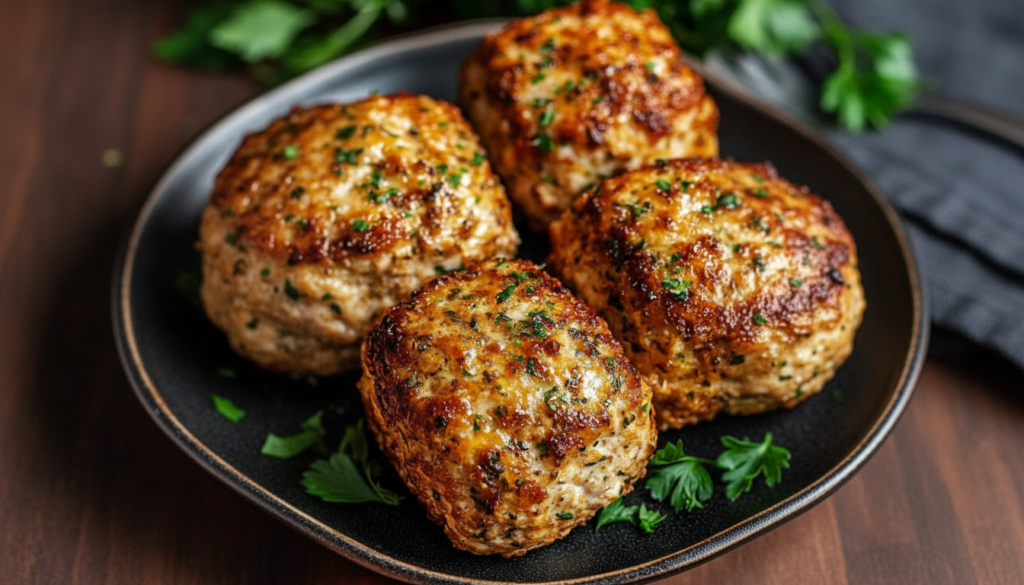
Garlic Parmesan Chicken Meatloaves (Juicy, Cheesy & Easy Dinner)
Regular meatloaf, made with ground beef, is a specific kind of comfort food that not everyone loves, but the individual-portion chicken version changes the character of the dish enough that it’s won over people who wouldn’t normally reach for meatloaf at all. Ground chicken is lighter than beef, garlic and parmesan bring a lot of flavor to something that could otherwise taste bland, and making individual loaves instead of one large one means faster cooking time and built-in portion control without any extra effort.
I started making these specifically because a full-sized meatloaf takes close to an hour to bake through properly, and on a weeknight, that’s often longer than I want to wait for dinner. Individual mini loaves cut that time down significantly while also giving each portion more surface area for a nice browned crust, which is honestly one of the better parts of any meatloaf.
They’ve also turned out to be a good option for households where people want slightly different amounts or don’t all finish at the same pace — since each loaf is already its own portion, there’s no cutting or dividing needed, and leftovers are automatically pre-portioned for the next day.
Why Ground Chicken Needs a Bit More Help Than Beef
Ground chicken is leaner and milder in flavor than ground beef, which means it dries out more easily if overcooked and doesn’t carry as much inherent flavor on its own. This recipe compensates for both issues — parmesan and garlic add real flavor depth that ground chicken doesn’t have naturally, and a breadcrumb and egg binder helps keep the texture moist rather than dense and dry, which is a common complaint with ground chicken dishes that don’t account for its leaner nature.
Ingredients
- 1.5 lbs ground chicken
- ½ cup breadcrumbs
- ½ cup grated parmesan cheese
- 1 egg
- 3 garlic cloves, minced
- 2 tablespoons fresh parsley, chopped
- 1 teaspoon Italian seasoning
- Salt and black pepper, to taste
Topping
- 2 tablespoons ketchup or tomato paste
- 1 tablespoon balsamic vinegar
- 1 teaspoon honey
- Extra parmesan, for sprinkling
How to Make It
Preheat the oven. Set to 375°F (190°C) and line a baking sheet with parchment paper, or lightly grease a muffin tin if you’d prefer a more uniform shape for each loaf.
Mix the meatloaf base. In a large bowl, combine the ground chicken, breadcrumbs, parmesan, egg, garlic, parsley, Italian seasoning, salt, and pepper. Mix just until combined — overmixing compacts the meat too much and results in a denser, tougher texture once baked.
Shape into individual loaves. Divide the mixture into 6-8 portions, depending on desired size, and shape each into a small loaf on the prepared baking sheet, leaving space between them for even cooking.
Make the topping. Whisk together the ketchup or tomato paste, balsamic vinegar, and honey in a small bowl until smooth.
Brush on the topping. Spread a thin layer of the topping over each loaf before baking, saving a little extra to brush on again partway through if you want a more pronounced glaze.
Bake. Bake for 25-30 minutes, until the internal temperature reaches 165°F (74°C) and the tops look nicely browned. If you brushed on extra topping partway through, add it around the 15-minute mark.
Finish with parmesan. Sprinkle a little extra parmesan over each loaf in the last 5 minutes of baking, letting it melt slightly and get a bit golden on top.
Rest before serving. Let the loaves rest for 5 minutes before serving, which helps them hold together better when you cut or serve them.
Common Questions I Get Asked About This One
Can I use ground turkey instead of chicken? Yes, they’re interchangeable in this recipe, and the technique and timing stay basically the same. Turkey and chicken have similar leanness, so the same moisture-retention tips apply to both.
Why did my meatloaves turn out dry? This is almost always either overcooking or overmixing the meat mixture. Pull them from the oven right at 165°F rather than well beyond it, and mix gently rather than compacting the mixture aggressively when combining ingredients. Adding a tablespoon or two of milk to the mixture can also help if you find your batches consistently turn out drier than you’d like.
Can I make these ahead and freeze them? Yes, they freeze well both before and after baking. If freezing raw, shape the loaves and freeze on a tray until solid, then transfer to a freezer bag. Bake from frozen, adding extra time, or thaw overnight in the fridge first for a more standard bake time.
What can I use instead of breadcrumbs? Panko works well and adds a slightly different texture, or crushed crackers in a pinch. For a lower-carb option, almond flour or crushed pork rinds can substitute, though the texture will be somewhat different from a traditional breadcrumb binder.
Is the topping necessary, or can I skip it? It’s optional, though it adds a nice tangy-sweet contrast to the savory garlic-parmesan flavor of the meatloaf itself. If you skip it, a simple marinara sauce spooned over the finished loaves works as an easy alternative.
Can I make one large loaf instead of individual portions? Yes, though the baking time will be significantly longer — closer to 45-55 minutes for a single large loaf, and you’ll need to check the internal temperature carefully since the center takes much longer to reach a safe temperature than smaller, individual portions. A large loaf also loses some of the crust-to-interior ratio that makes the individual version particularly good, since there’s simply less exterior surface area relative to the overall volume.
A Few Things I’ve Learned Making This Often
Don’t overmix the meat mixture. It’s tempting to really work everything together thoroughly, but overmixing ground chicken specifically leads to a denser, more compact texture once baked, since the proteins bind more tightly the more they’re handled.
Use a meat thermometer rather than guessing based on time alone. Ground chicken needs to reach 165°F to be safe to eat, and because individual loaves vary slightly in size, relying purely on the clock can lead to some being undercooked while others are overdone.
Letting the loaves rest for a few minutes after baking makes a real difference in how well they hold together when served, similar to how resting a steak or roast lets the juices redistribute rather than running out the moment you cut into it.
If you’re making these for kids or picky eaters, going lighter on the garlic and skipping the tangy topping in favor of just plain melted cheese on top makes for a milder version that’s still flavorful without the more assertive flavors some people might not enjoy.
A cast-iron or heavy baking sheet tends to brown the bottoms of the loaves better than a thin, flimsy sheet pan, giving you a bit more textural contrast between the crisp exterior and the tender interior.
If you’re doubling the recipe for a larger group, resist the urge to make the individual loaves bigger to save time — larger loaves take considerably longer to cook through in the center, and you lose the main advantage of the individual-portion format, which is a faster, more even bake with a better ratio of browned crust to tender interior.
What to Pair It With
These pair well with mashed potatoes, roasted vegetables, or a simple green salad. Because the loaves are individually portioned, they also work well for meal prep lunches paired with a grain like rice or quinoa and some steamed vegetables on the side.
Storage
Cooked meatloaves keep in an airtight container in the fridge for up to 4 days. Reheat gently in the oven at 300°F until warmed through, or in the microwave in short bursts if you’re short on time, though the oven method preserves the texture a bit better than microwaving does. They also freeze well for up to 3 months — thaw overnight in the fridge before reheating for the best texture.
If you’re planning to freeze a batch specifically for future meals, consider slightly undercooking them by a couple of minutes before freezing, since they’ll finish cooking further during the reheating process. This helps avoid ending up with a slightly dry or overcooked result the second time around, which can happen if a fully cooked loaf goes through a full reheat cycle on top of its original bake.
If you’ve tried a different topping or seasoning blend for these, I’d like to hear how it turned out.