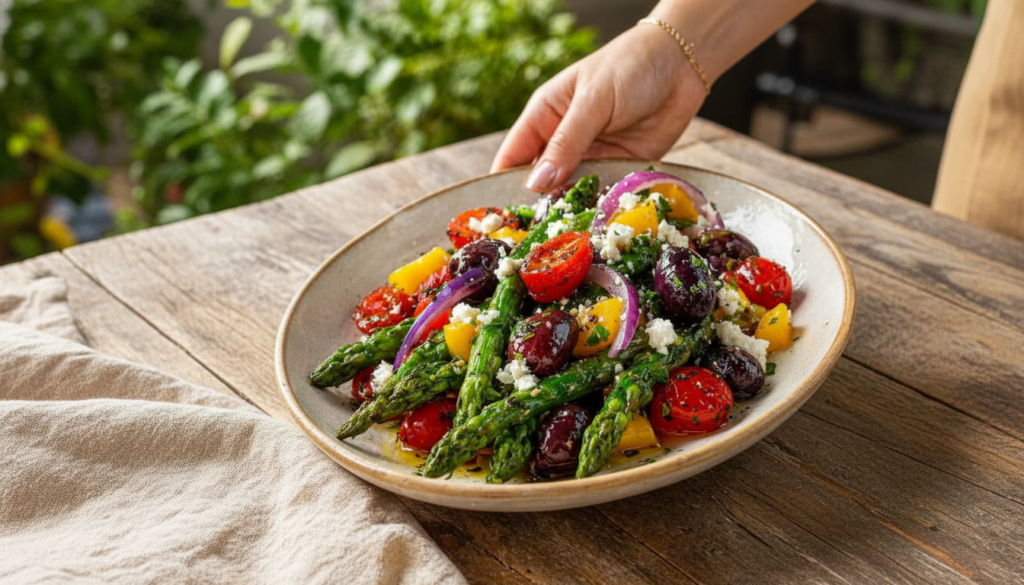
Mediterranean Asparagus Olive Salad (Fresh, Crisp & Flavor-Packed)
Asparagus tends to get treated as a side dish and nothing more, usually just roasted or steamed and served alongside whatever the main protein of the night happens to be. This salad came out of wanting to give asparagus a bit more of a starring role, built around the kind of bright, briny flavors that Mediterranean cooking does so well — olives, lemon, good olive oil, and a bit of feta to round everything out.
I started making this specifically in the spring, when asparagus is at its best and cheapest, and wanted something that would let it shine rather than burying it under a heavier sauce or treatment. What surprised me the first time I made it is how well raw or lightly blanched asparagus works in a cold salad format, holding a satisfying crunch that roasted asparagus, softened by heat, just doesn’t have in the same way.
It’s since become a recipe I lean on whenever asparagus shows up cheap and abundant at the market, since it’s one of the few preparations that treats it as a genuine centerpiece rather than a supporting player squeezed onto the side of a plate.
Why Blanching Beats Both Raw and Fully Roasted Here
Fully raw asparagus can be a bit too fibrous and tough for some people’s taste, particularly with thicker spears, while fully roasted asparagus goes soft in a way that doesn’t hold up as well once it’s tossed with a vinaigrette and left to sit for a bit before serving. Blanching briefly — just a minute or two in boiling water, then straight into an ice bath — softens the asparagus just enough to make it pleasant to eat cold while preserving a real bite and that vibrant green color that dulls quickly with longer cooking.
Ingredients
- 1 lb asparagus, trimmed
- ½ cup kalamata olives, pitted and halved
- ½ cup cherry tomatoes, halved
- ¼ red onion, thinly sliced
- ¼ cup crumbled feta cheese
- 2 tablespoons fresh parsley, chopped
Dressing
- 3 tablespoons olive oil
- 1 tablespoon lemon juice
- 1 teaspoon Dijon mustard
- ½ teaspoon dried oregano
- 1 small garlic clove, minced
- Salt and black pepper, to taste
How to Make It
Blanch the asparagus. Bring a pot of salted water to a boil. Add the trimmed asparagus and cook for 1-2 minutes, until it turns bright green and just barely tender. Immediately transfer to a bowl of ice water to stop the cooking process and lock in the color. Drain well and pat dry once cooled.
Cut the asparagus. Once cooled and dried, cut the spears into 2-inch pieces on a slight diagonal, which makes for nicer presentation than straight cuts and helps them mix more evenly with the other ingredients.
Make the dressing. Whisk together the olive oil, lemon juice, Dijon mustard, oregano, garlic, salt, and pepper in a small bowl until well combined and slightly thickened.
Combine the salad. In a large bowl, combine the asparagus, olives, cherry tomatoes, red onion, and parsley. Pour the dressing over and toss gently to coat everything evenly.
Add the feta last. Sprinkle the crumbled feta over the top and give the salad one final gentle toss, being careful not to break the feta down too much into smaller crumbles than intended.
Chill briefly before serving. Fifteen to twenty minutes in the fridge helps the flavors meld together, though this salad is also perfectly good served immediately if you’re short on time.
Common Questions I Get Asked About This One
Can I use roasted asparagus instead of blanched? Yes, if you prefer that flavor profile, though the texture will be noticeably softer and the color a bit more muted than what you get from a quick blanch. Roasted asparagus also tends to release a bit more moisture into the salad over time as it sits, so consider serving it a little sooner after assembling if you go this route.
How do I know when asparagus is properly trimmed? Bend a spear near the base — it will naturally snap where the tough, woody part ends and the tender part begins. Alternatively, just trim about an inch or two off the bottom with a knife, adjusting based on how thick the stalks are.
Can I make this ahead of time for a party? You can blanch the asparagus and prep the other vegetables up to a day ahead, storing everything separately in the fridge. Combine and dress the salad closer to serving time, and add the feta at the very last step to keep it looking fresh rather than sitting in dressing for hours.
Is there a substitute for feta if I want something different? Goat cheese offers a similarly tangy quality with a creamier texture, while a hard cheese like parmesan gives a different, more savory edge if you’d rather move away from the classic Mediterranean feta pairing. A dairy-free feta alternative also works reasonably well if you’re avoiding dairy but still want that salty, crumbly element in the salad.
Why did my asparagus turn a dull green color? This usually happens from overcooking during the blanching step, or from not transferring it to an ice bath quickly enough afterward. The ice bath halts the cooking process almost immediately and helps preserve that bright green color that fresh asparagus is known for.
A Few Things I’ve Learned Making This Often
Don’t skip the ice bath after blanching, even if it feels like an unnecessary extra step. It’s really the single biggest factor in whether your asparagus stays crisp and vibrant or turns soft and faded looking by the time it’s dressed and served.
Thicker asparagus spears benefit from an extra 30 seconds or so in the boiling water compared to thin, pencil-sized spears, which cook through almost instantly and can go from perfectly blanched to overcooked in a very short window.
If you’re not a fan of raw onion’s sharpness, a quick 10-minute soak in cold water mellows it out considerably without needing to cook it, which would change the texture in a way that doesn’t fit this cold salad format.
A handful of toasted pine nuts or slivered almonds adds a nice textural contrast if you want a bit of crunch beyond what the asparagus itself provides, and it’s a common addition in a lot of Mediterranean-style salads for exactly that reason.
Taste the dressing on its own before adding it to the salad, and adjust the lemon or salt as needed. Once it’s tossed with olives and feta, both of which carry their own saltiness, it’s harder to correct the balance after the fact without risking an overdressed salad.
If you’re scaling this recipe up for a larger gathering, blanch the asparagus in batches rather than trying to fit an entire large bunch into one pot at once. Overcrowding the pot cools the water down too quickly and leads to uneven cooking, with some spears undercooked while others sit in the water too long waiting for space.
I’ve also found that this salad works well as a base for adding a protein if you want to turn it into more of a complete meal rather than a side dish. Grilled shrimp or chicken tossed in with the same dressing complements the briny olives and tangy feta nicely, without needing any additional seasoning beyond what’s already in the vinaigrette.
What to Pair It With
This works well as a side dish alongside grilled chicken, lamb, or fish, or as part of a larger Mediterranean-style spread with hummus, pita, and other cold salads. It also holds up nicely on its own as a light lunch, particularly in warmer months when a cold, crisp salad is more appealing than something heavier.
Storage
Without the feta added, this keeps reasonably well in an airtight container in the fridge for up to 2 days, though the asparagus does soften somewhat the longer it sits in the dressing. Once the feta is mixed in, it’s best eaten within a day, since the cheese doesn’t hold up quite as well over a longer stretch mixed in with the acidic dressing and vegetables.
If you know you’re making this specifically for leftovers rather than immediate serving, it’s worth keeping the dressing in a separate container entirely and tossing individual portions fresh as you go, rather than dressing the whole batch upfront. This keeps the asparagus crisper for longer and avoids the slightly wilted texture that develops once vegetables sit in an acidic dressing for an extended period in the fridge.
If you’ve added your own twist to this one — different olives, a different cheese — I’d like to hear how it turned out.