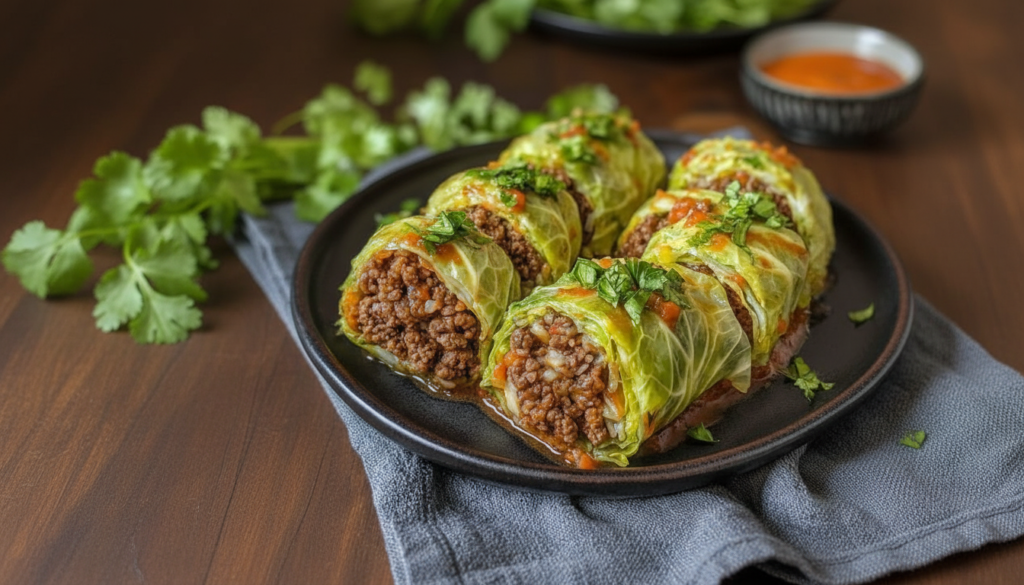
Stuffed Cabbage Rolls (Comforting, Hearty & Worth the Effort)
Stuffed cabbage rolls have a reputation for being a weekend project rather than a weeknight dinner, and honestly, that reputation is fair. There’s blanching cabbage leaves, mixing a filling, rolling each one individually, and then a long simmer to bring it all together. It’s not a fast recipe. But it’s the kind of thing that rewards the time you put into it, and once you’ve made a batch, you’ve usually got enough for several meals out of the effort.
I learned to make these from watching my grandmother work through a full head of cabbage without ever measuring anything, and it took me a few attempts on my own to get the ratios and technique down without her standing over my shoulder. What I eventually landed on is a version that keeps things reasonably simple without cutting corners on the parts that actually matter — a well-seasoned filling and a sauce with enough acidity to balance the richness of the meat and rice inside.
Why the Simmer Matters as Much as the Filling
A lot of people focus entirely on getting the filling right and treat the sauce and simmering step as an afterthought, but that long, slow cook is really what turns individual rolled-up ingredients into something that tastes like it’s been cooking for hours. The tomato-based sauce reduces slightly, the cabbage softens further and takes on the sauce’s flavor, and the rice inside finishes cooking through in a way it wouldn’t if you just baked the rolls quickly instead.
Ingredients
For the rolls
- 1 large head of cabbage
- 1 lb ground beef (or a mix of beef and pork)
- ½ cup uncooked rice
- 1 small onion, finely chopped
- 1 egg
- 2 garlic cloves, minced
- 1 teaspoon paprika
- Salt and black pepper, to taste
For the sauce
- 2 cups crushed tomatoes
- 1 cup beef or vegetable broth
- 1 tablespoon tomato paste
- 1 tablespoon brown sugar
- 1 tablespoon apple cider vinegar
- Salt and black pepper, to taste
How to Make It
Prep the cabbage. Bring a large pot of water to a boil. Core the cabbage and carefully peel off the outer leaves, boiling them in batches for 2-3 minutes each until pliable. Set them aside to cool slightly. Trim the thick center rib from each leaf so they roll more easily without tearing.
Make the filling. In a bowl, combine the ground beef, uncooked rice, chopped onion, egg, garlic, paprika, salt, and pepper. Mix just until combined — overmixing makes the filling dense rather than tender once it’s cooked.
Roll the cabbage. Place a couple tablespoons of filling near the base of each leaf, fold the sides in over the filling, then roll upward, tucking the sides in like a burrito. It doesn’t need to be perfect; a loosely rolled cabbage leaf that holds together is fine.
Make the sauce. Whisk together the crushed tomatoes, broth, tomato paste, brown sugar, apple cider vinegar, salt, and pepper in a bowl.
Assemble and simmer. Spread a thin layer of sauce in the bottom of a large pot or Dutch oven. Arrange the cabbage rolls seam-side down in a single layer (or stacked carefully if needed), then pour the remaining sauce over the top. Cover and simmer on low heat for 60-75 minutes, until the rice inside is fully cooked and the cabbage is tender.
Rest before serving. Let the rolls sit for 5-10 minutes off the heat before serving — they hold together better once they’ve had a moment to settle.
Common Questions I Get Asked About This One
Can I use ground turkey or chicken instead of beef? Yes, though the filling will taste noticeably lighter and less rich. If you go this route, a little extra seasoning and maybe a splash of Worcestershire sauce in the filling helps make up for the flavor beef naturally brings.
My cabbage leaves keep tearing when I try to roll them — what am I doing wrong? Usually this means the leaves weren’t boiled long enough to soften, or the thick center rib wasn’t trimmed down. Both make the leaf stiff and prone to splitting when you try to fold it.
Can I make these ahead and freeze them? Yes, and they freeze well either before or after cooking. If freezing cooked rolls, let them cool completely first, then store in a freezer-safe container with some of the sauce to keep them from drying out. Thaw in the fridge overnight before reheating.
Why is my rice still hard after simmering for over an hour? This usually means the pot wasn’t at a proper simmer, or the lid wasn’t sealing well enough to trap steam. A gentle but consistent simmer, with the lid on tight, is what actually cooks the rice through inside the rolls.
Do I have to use white rice, or can I substitute something else? Brown rice works, though it needs a longer simmer time since it takes longer to cook through than white rice — plan for closer to 90 minutes if you go that route.
A Few Things I’ve Learned Making These Often
Save the smaller, torn, or awkwardly shaped cabbage leaves and chop them roughly to line the bottom of the pot before adding the rolls. This gives the rolls something to sit on besides the bare pot bottom and helps prevent sticking or scorching during the long simmer.
Don’t rush the boiling step for the cabbage leaves. Leaves that are still a bit stiff will crack when you try to roll them, and there’s no fixing that once it happens — you’ll just end up with a leaky roll.
A splash of vinegar in the sauce isn’t traditional in every version, but it cuts through the richness of the meat filling in a way that plain tomato sauce alone doesn’t quite manage.
These genuinely taste better the next day, after the flavors have had more time to meld together in the fridge overnight. If you have the option, making them a day ahead of when you plan to serve them is worth considering.
What to Pair It With
A simple side of crusty bread for soaking up extra sauce is really all this needs. If you want something more substantial alongside it, mashed potatoes or a light cucumber salad both work well without competing with the rich, tomato-based flavor of the rolls themselves.
Storage
Keeps in an airtight container in the fridge for up to 4 days, and the flavor genuinely improves after the first day. These also freeze well for up to 2-3 months — thaw overnight in the fridge before reheating gently on the stove or in the oven.
If you’ve made your own version with a different filling or sauce twist, I’d like to hear how it turned out.