Greek Salad (Horiatiki) — Fresh, Crisp & Genuinely Authentic
There’s a version of Greek salad you find at a lot of restaurants that’s basically just chopped lettuce with a few olives and a cube of feta thrown on top, and it’s fine, but it’s not actually a Horiatiki. The real village-style salad doesn’t have lettuce in it at all. It’s tomatoes, cucumber, onion, peppers, olives, and a slab of feta on top — not crumbled in, but sitting whole on the surface, meant to be broken apart with a fork as you eat. Once I started making it that way, the restaurant version stopped making sense to me.
I picked up this version from watching how it’s traditionally made rather than from any specific recipe, and the biggest adjustment for me was trusting that fewer ingredients, handled well, beat a long ingredient list every time. Ripe tomatoes, good olive oil, and real feta carry almost the entire dish. Everything else is there to support those three things.
What Makes It “Horiatiki” and Not Just “Greek Salad”
The word roughly translates to “village salad,” and the whole point is rustic simplicity — the tomatoes and cucumber cut into large, rough chunks rather than diced small, the feta left whole on top instead of crumbled through, and no lettuce padding out the bowl. It’s meant to taste like each ingredient on its own, not blended together into one uniform flavor.
Ingredients
- 4 large ripe tomatoes, cut into large chunks
- 1 cucumber, sliced into thick half-moons
- 1 green bell pepper, sliced into rings
- ½ red onion, thinly sliced
- ½ cup kalamata olives
- 1 block (about 4-6 oz) feta cheese, left whole
- 3-4 tablespoons good olive oil
- 1 tablespoon red wine vinegar
- 1 teaspoon dried oregano
- Salt and black pepper, to taste
How to Make It
Cut everything larger than you think you should. This isn’t a finely diced salad. Tomatoes in big wedges or chunks, cucumber in thick pieces, onion in visible slices rather than minced. The texture is part of what makes it feel rustic instead of like a standard chopped salad.
Layer, don’t toss aggressively. Arrange the tomatoes, cucumber, bell pepper, onion, and olives in a wide, shallow bowl or on a platter rather than dumping everything into a deep bowl and stirring hard. A gentle toss to distribute things is fine, but you’re not trying to coat every piece evenly the way you would with a leafy salad.
Place the feta whole on top. This is the step that differs most from what people usually expect. Set the block of feta directly on top of the vegetables rather than crumbling it in beforehand.
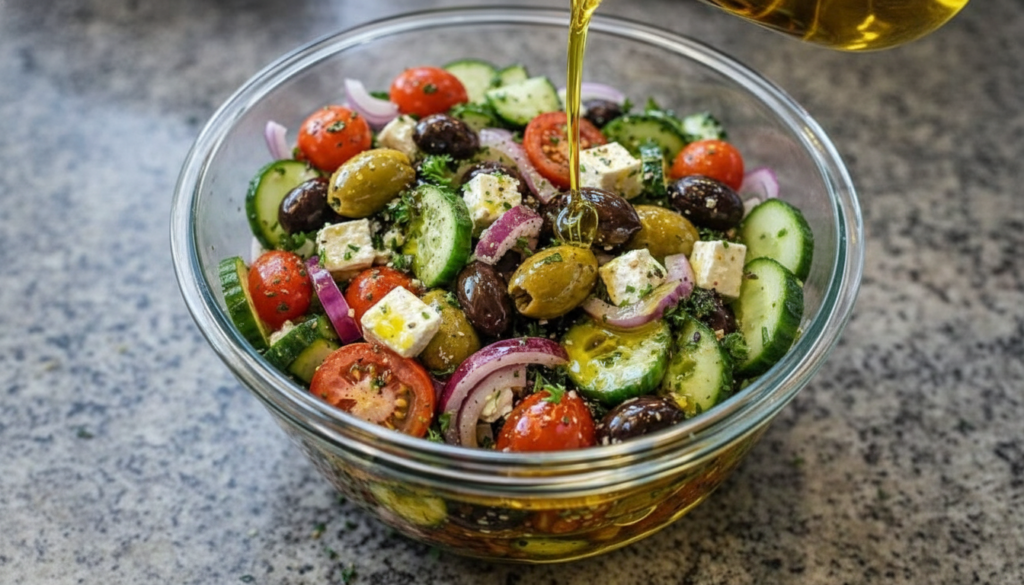
Season generously. Drizzle the olive oil and red wine vinegar over the whole thing, including directly over the feta. Sprinkle the oregano, salt, and pepper over everything, again including the cheese itself.
Serve immediately, or close to it. Unlike some salads that benefit from resting, this one is best assembled and eaten within 20-30 minutes, while the vegetables are still firm and the feta hasn’t started softening too much from the oil and vinegar.
Common Questions I Get Asked About This One
Why is the feta left whole instead of crumbled? It’s mostly tradition and texture. A whole block holds its structure and lets people break off pieces as they eat, mixing it with whatever vegetable they’re picking up at the time, rather than having it distributed evenly (and often turning slightly mushy) throughout the whole bowl.
Can I add lettuce if I prefer more bulk? You can, though at that point it’s more of a personal preference variation than a traditional Horiatiki. If you do add it, romaine holds up better than a softer lettuce that would wilt quickly under the dressing.
What’s the best type of olive oil to use here? Since the dressing is so minimal, a decent extra virgin olive oil actually makes a noticeable difference. This is one salad where the quality of that single ingredient shows up clearly in the final flavor.
My tomatoes don’t taste like much — is there a fix? Not really, beyond using the ripest, best tomatoes you can find. This salad depends heavily on good tomatoes; there’s no cooking or long marinating step to mask a bland one. Room-temperature tomatoes generally taste better than cold ones straight from the fridge, so pulling them out an hour before making the salad helps.
Can I make this ahead of time? Only partially. You can slice the vegetables a few hours ahead and store them separately, but avoid dressing the salad or adding the feta until close to serving time, since the vegetables release liquid once dressed and lose their crunch the longer they sit.
A Few Things I’ve Learned Making This Often
Salt the tomatoes lightly a few minutes before serving if they’re on the milder side — it draws out a bit of moisture and intensifies the flavor slightly without making the salad watery.
Don’t skimp on the olive oil. This salad relies on it more than most, since there’s no creamy dressing or heavy sauce doing the work. A light drizzle isn’t enough; go generous.
If your onion tastes too sharp even after slicing thin, a quick rinse under cold water for a few seconds mellows it out without needing a longer soak.
Serve it with bread on the side specifically for soaking up the leftover olive oil and tomato juices at the bottom of the plate — that’s genuinely one of the best parts and shouldn’t go to waste.
What to Pair It With
This works well alongside grilled fish, lamb, or chicken, and it’s common to see it served with warm pita and a side of tzatziki for a fuller Mediterranean-style spread. It also stands on its own as a light lunch with some crusty bread.
Storage
This one doesn’t store particularly well once assembled — the vegetables soften and release liquid within a few hours of being dressed. If you have leftovers, expect the texture to be noticeably softer the next day, though the flavor still holds up reasonably well for a day in the fridge in a sealed container.
If you’ve made your own version with a different olive variety or extra herbs, I’d like to hear how it turned out.