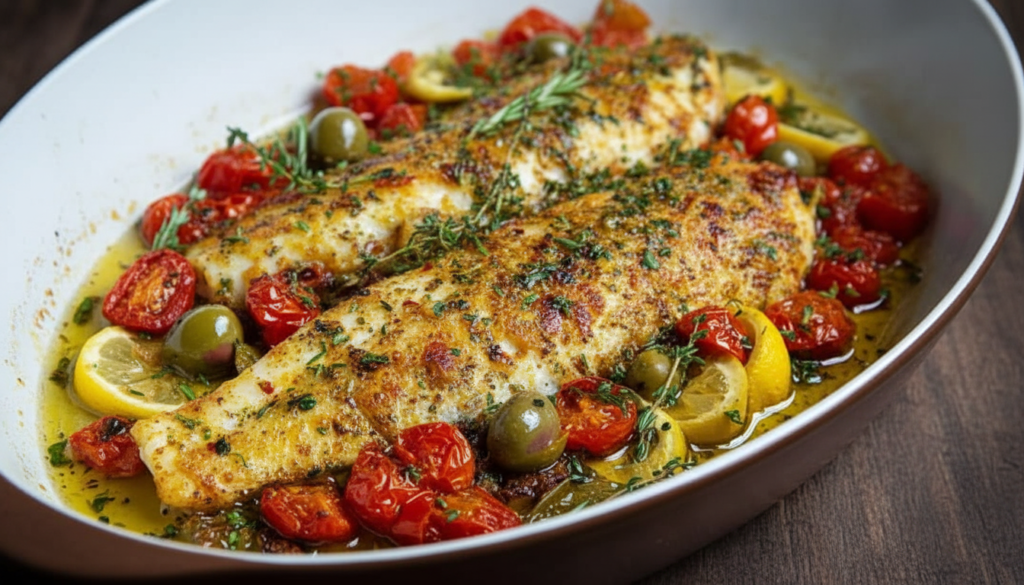
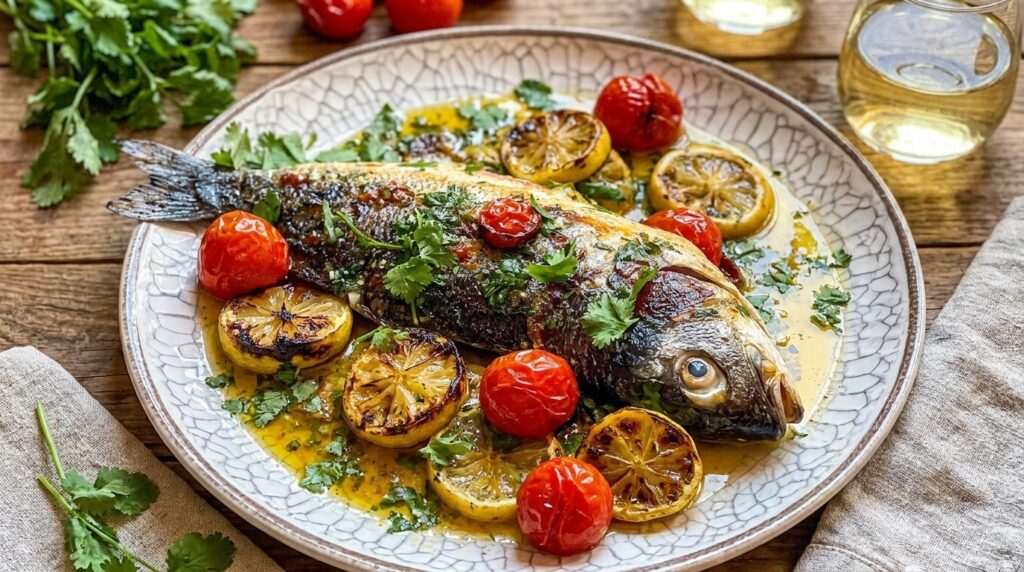
Mediterranean-Style Branzino (Light, Elegant & Effortlessly Flavorful)
Branzino has a reputation for being a restaurant fish — something you order rather than cook — but it’s actually one of the more forgiving whole fish to prepare at home, once you get past the slight intimidation of dealing with something that still has its head and bones intact. Mild, delicate, and quick to cook, it takes on lemon, herbs, and olive oil beautifully without needing much else to taste like something special.
I started cooking branzino at home after realizing how much I was spending ordering it out for what amounted to a simply prepared fish with lemon and herbs — nothing overly technical, just good ingredients handled with a light touch. Once I got comfortable scoring and stuffing a whole fish, it stopped feeling like a special-occasion-only dish and became something I make whenever I can find a good, fresh branzino at the market.
It also happens to be one of the better dishes for anyone trying to eat lighter without feeling like they’re missing out on flavor. There’s no heavy sauce or breading involved, just the fish itself, olive oil, lemon, and herbs, which lets the natural sweetness of the branzino come through clearly rather than getting buried under anything else.
Why Whole Fish Cooks Better Than It Sounds
Cooking a fish whole, bones and all, actually helps keep it moist in a way that a boneless fillet sometimes doesn’t. The bones and skin protect the delicate flesh from drying out during cooking, and stuffing the cavity with lemon and herbs means the fish essentially steams itself from the inside while roasting or grilling on the outside. It sounds more complicated than filleting, but it’s genuinely a more forgiving method for a fish this delicate.
Ingredients
- 2 whole branzino, cleaned and scaled (ask your fishmonger to do this if you’re not comfortable)
- 2 lemons, one sliced thin, one for juicing
- 4 sprigs fresh thyme
- 4 sprigs fresh rosemary
- 4 garlic cloves, smashed
- 3 tablespoons olive oil
- Salt and black pepper, to taste
- Fresh parsley, chopped, for garnish
How to Make It
Preheat your oven or grill. If roasting, preheat to 425°F (220°C). If grilling, get your grill to medium-high heat and make sure the grates are clean and well-oiled to prevent sticking.
Score the fish. Using a sharp knife, make 3-4 shallow diagonal cuts on each side of the fish. This helps it cook more evenly and lets the seasoning penetrate slightly beyond just the surface.
Season inside and out. Rub the fish, inside the cavity and on the outer skin, with salt, pepper, and a drizzle of olive oil.
Stuff the cavity. Fill each fish with lemon slices, a couple sprigs of thyme and rosemary, and a smashed garlic clove or two. This is really where a lot of the flavor comes from, so don’t skip it even though it’s tucked away out of sight.
Cook the fish. For roasting, place the fish on a lined baking sheet and roast for 20-25 minutes, until the flesh is opaque and flakes easily near the bone. For grilling, cook for about 6-8 minutes per side over medium-high heat, being gentle when flipping so the delicate flesh doesn’t fall apart.
Finish with lemon and herbs. Once cooked, squeeze fresh lemon juice over the fish and sprinkle with chopped parsley before serving.
Common Questions I Get Asked About This One
How do I know if branzino is fresh at the store? Look for clear, not cloudy, eyes, and skin that looks moist and shiny rather than dull or dry. It shouldn’t smell overly fishy — a mild, clean ocean smell is what you want.
Can I ask the fishmonger to prep it for me? Absolutely, and most fish counters are happy to clean and scale it for you if you ask. This removes a lot of the intimidation factor if you’re new to cooking whole fish.
Do I have to cook it whole, or can I use fillets instead? Fillets work fine if you’d rather skip the whole-fish process, though you’ll lose some of the moisture retention that cooking it whole provides. If using fillets, reduce the cooking time significantly, since they cook much faster than a whole fish.
How do I remove the bones once it’s cooked? Run a knife along the spine from head to tail, then gently lift the top fillet away from the bones. The skeleton typically lifts out cleanly, leaving the bottom fillet exposed and ready to serve.
What if I don’t have fresh herbs? Dried thyme and rosemary work in a pinch, though the flavor won’t be quite as bright. Use about a third of the amount you would with fresh herbs, since dried versions are more concentrated.
A Few Things I’ve Learned Making This Often
Don’t skip scoring the fish, even though it feels like an unnecessary extra step. Those shallow cuts help heat penetrate more evenly and give you a slightly crisper skin in the areas where the cuts are made.
If grilling, resist the urge to move the fish around too much once it’s on the grates. Branzino is delicate, and constant flipping or repositioning increases the risk of it falling apart before it’s fully cooked.
A meat thermometer isn’t really necessary here — the fish is done when the flesh near the bone turns opaque and separates easily with a fork, which is a more reliable indicator than temperature alone for whole fish this size.
If you’re nervous about serving a whole fish with the head still on, it’s completely fine to ask your fishmonger to remove the head before you take it home. It doesn’t change the flavor, just the presentation.
Two smaller branzino generally serve two people comfortably as a main course, but if you’re cooking for a larger group, it’s easier to scale up by adding more whole fish to the same tray rather than trying to stretch fewer fish further with bigger portions — branzino is best served as its own complete portion per person rather than split and shared.
What to Pair It With
Branzino pairs beautifully with something simple — roasted vegetables, a light couscous or orzo salad, or steamed greens with lemon. Since the fish itself is delicate in flavor, sides that are similarly light work better than anything too heavy or rich, which would overshadow the branzino rather than complement it.
Storage
Cooked fish like this is really best eaten the day it’s made — the delicate texture doesn’t hold up particularly well to refrigeration and reheating. If you do have leftovers, remove the meat from the bones, store it in an airtight container for up to a day, and use it cold in a salad rather than trying to reheat it, since reheating tends to dry it out and make it slightly rubbery.
If you’ve tried this with a different herb combination or cooking method, I’d like to hear how it turned out.