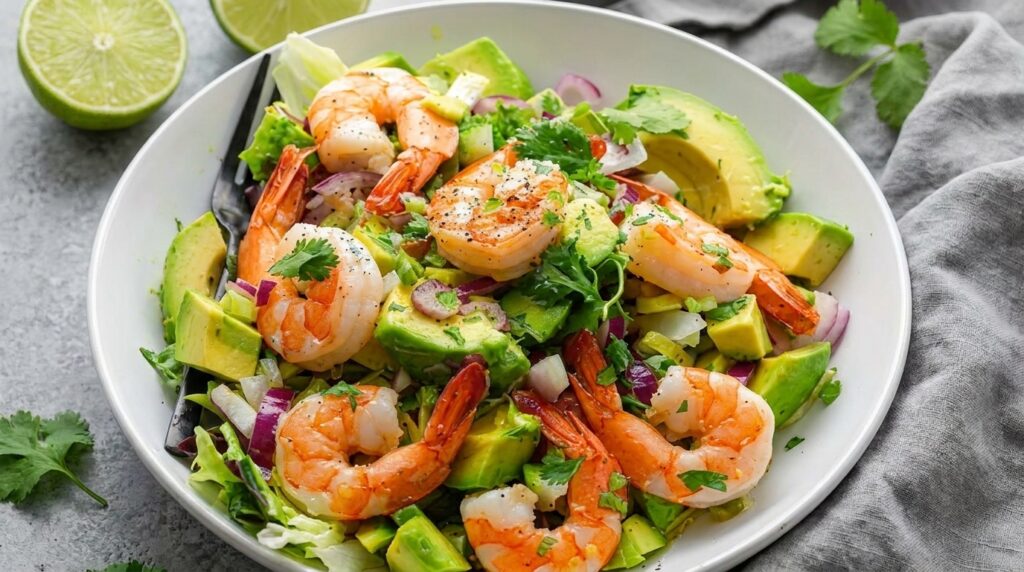
Zesty Shrimp Avocado Salad (Fresh, Bright & Perfectly Balanced)
Some salads need a long list of components to feel complete, and some don’t. This one falls into the second category — shrimp, avocado, a handful of fresh vegetables, and a zesty citrus dressing, and that’s really all it takes to make something that tastes far more put-together than the short ingredient list suggests. I keep coming back to it specifically because it doesn’t require much planning; if I have shrimp and an avocado that’s ripe and ready, this is usually where they end up.
What makes it work is leaning into contrast rather than complexity. Cool, creamy avocado against seared, slightly charred shrimp. A bright, acidic dressing cutting through the richness of both. Crunch from whatever fresh vegetables you’re adding in. None of the individual pieces are complicated, but together they cover enough textural and flavor ground that the salad doesn’t feel thin or one-note.
I’ve served this at both casual weeknight dinners and slightly more put-together lunches for company, and it holds up well in either setting. There’s something about a salad this simple that reads as more intentional than a longer, more elaborate ingredient list — it’s clear nothing’s there by accident.
Why Searing the Shrimp Matters Here
It’s tempting to just boil or steam the shrimp quickly and call it done, but a hard sear in a hot pan adds a layer of flavor that boiling just doesn’t achieve — some caramelization on the surface, a bit of char in spots, and a slightly firmer texture that holds up better against the softness of the avocado. It only takes a couple of extra minutes compared to boiling, but the flavor payoff is noticeable.
Ingredients
- 1 lb shrimp, peeled and deveined
- 1 tablespoon olive oil, plus more for dressing
- 1 avocado, diced
- 1 cup cherry tomatoes, halved
- ½ cucumber, diced
- ¼ red onion, thinly sliced
- 2 tablespoons fresh cilantro, chopped
Dressing
- 3 tablespoons olive oil
- 2 tablespoons lime juice
- 1 teaspoon honey
- ½ teaspoon chili powder
- Salt and black pepper, to taste
How to Make It
Sear the shrimp. Pat the shrimp dry and toss with a little salt and pepper. Heat the olive oil in a skillet over medium-high heat and cook the shrimp for about 2 minutes per side, until they’re pink, opaque, and have some color on the surface. Don’t overcrowd the pan — cook in batches if needed, since crowded shrimp steam instead of sear and won’t develop the same char.
Let the shrimp cool slightly. Transfer to a plate and let them cool for a few minutes while you prep the rest of the salad. Adding hot shrimp directly to the avocado and vegetables can start to soften everything prematurely.
Prep the vegetables. Dice the avocado, halve the cherry tomatoes, dice the cucumber, and thinly slice the red onion. If you find raw onion too sharp, a quick soak in cold water for 10 minutes mellows it out.
Make the dressing. Whisk together the olive oil, lime juice, honey, chili powder, salt, and pepper until combined.
Combine everything. In a large bowl, gently toss the shrimp, avocado, tomatoes, cucumber, onion, and cilantro. Pour the dressing over and toss lightly — you want to coat everything without mashing the avocado into a paste.
Serve promptly. This salad is best eaten shortly after assembling, while the avocado is still firm and the shrimp still has some of that fresh-off-the-pan texture.
Common Questions I Get Asked About This One
Can I use frozen shrimp? Yes, just make sure it’s fully thawed and patted very dry before searing. Wet shrimp won’t develop any color in the pan and will steam rather than sear, leaving them pale instead of nicely browned.
How do I keep the avocado from browning if I’m making this ahead? Toss the diced avocado in a little extra lime juice before combining it with everything else — the acid slows oxidation, though it won’t prevent browning entirely if the salad sits for many hours.
Can I make this a heartier meal instead of a side salad? Serving it over a bed of greens or alongside cooked rice or quinoa turns this into a more substantial main course without much extra effort.
Is there a way to make this less spicy? The chili powder in the dressing is mild as written, but you can leave it out entirely if you’d rather keep the dressing purely citrusy without any heat.
What can I use instead of shrimp if I don’t eat seafood? Grilled chicken or seared tofu both work well with the same citrus dressing and vegetable combination, though you’ll lose some of the specific flavor pairing shrimp brings alongside the avocado.
A Few Things I’ve Learned Making This Often
Don’t skip patting the shrimp dry before searing. It’s a small step that gets overlooked, but it’s the difference between a shrimp that browns nicely and one that just turns pink without any real color or texture on the surface.
Dice the avocado gently and add it toward the end of assembly rather than tossing it aggressively with everything else. Overhandling avocado breaks it down quickly into a mushy texture instead of keeping distinct, creamy chunks throughout the salad.
If your shrimp are on the smaller side, reduce the sear time slightly — small shrimp cook through faster and can turn rubbery if left in the pan as long as you’d cook larger shrimp.
A pinch of extra salt right before serving often brightens the whole salad if it tastes a little flat after sitting for a few minutes, since salt levels can taste different once everything’s mixed together compared to tasting the dressing on its own.
If you want to add a bit more substance without changing the character of the dish, a handful of cooked corn or black beans mixed in works well alongside the existing vegetables without overwhelming the fresh, citrusy flavor the salad is built around.
What to Pair It With
This works well on its own as a light lunch, alongside grilled fish or chicken for a fuller dinner, or stuffed into a tortilla or lettuce wrap if you want something a bit more portable.
Storage
This salad doesn’t hold up particularly well overnight due to the avocado and the acidic dressing softening the vegetables over time. If you have leftovers, expect a softer texture the next day, though the flavor still holds up reasonably well for about a day in the fridge in a sealed container.
If you’ve swapped in a different protein or dressing twist, I’d like to hear how it turned out.