Stuffed Salmon and Shrimp Scampi (Rich, Buttery & Restaurant-Worthy)
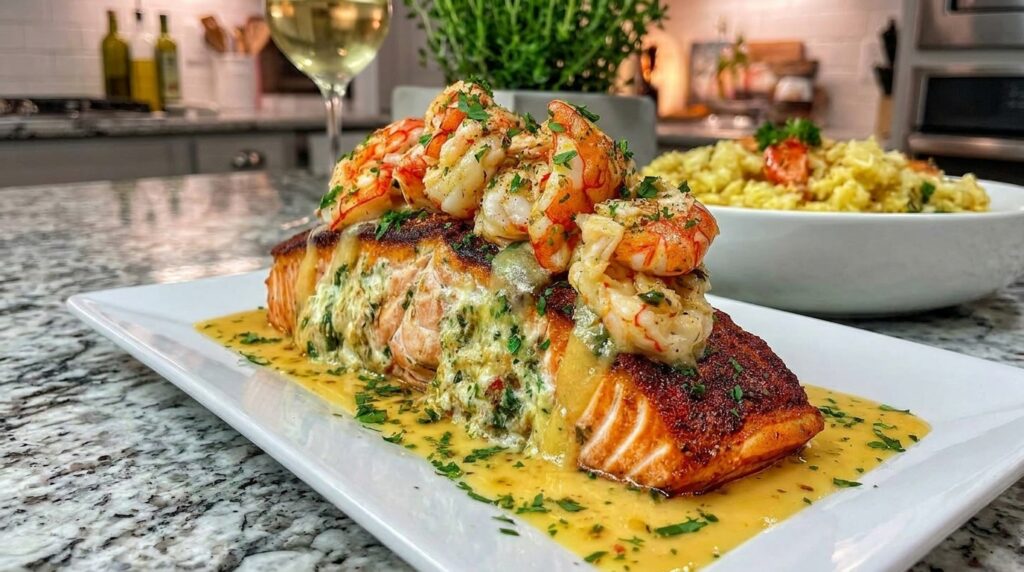
This is the dish I make when I want dinner to feel like a genuine occasion without actually going out anywhere. Salmon fillets get a pocket cut in, stuffed with a rich shrimp scampi-style filling, and baked until the salmon is just cooked through and the filling is warm and fragrant with garlic and butter. It looks like something you’d order at a steakhouse that also happens to do seafood well, but it comes together with fairly ordinary technique once you understand the sequence.
I landed on this combination almost by accident, trying to use up leftover cooked shrimp from another meal by stuffing it into salmon instead of serving the two proteins separately. It turned out that shrimp scampi — garlic, butter, a little wine, lemon — makes an excellent filling for salmon specifically, since the richness of the scampi sauce complements the salmon rather than competing with it. What started as a way to avoid wasting leftovers has since become one of the dishes I plan for on purpose when I want something that feels more special than a typical weeknight dinner.
Why Stuffing Salmon Works Better Than It Sounds
Salmon fillets are thick enough to hold a real pocket without falling apart, unlike thinner white fish, and the fattiness of salmon pairs well with a rich, buttery filling instead of getting overwhelmed by it the way a leaner fish might. Cutting a pocket and stuffing it also means you get filling in every bite, rather than having a separate scampi dish next to plain salmon on the plate.
Ingredients
For the filling
- ½ lb small shrimp, peeled, deveined, and roughly chopped
- 2 tablespoons butter
- 2 garlic cloves, minced
- 2 tablespoons white wine (or chicken broth)
- 1 tablespoon lemon juice
- 2 tablespoons fresh parsley, chopped
- Salt and black pepper, to taste
For the salmon
- 4 salmon fillets (skin-on or skin-off)
- 1 tablespoon olive oil
- Salt, black pepper, and paprika, for seasoning
- Extra butter, for basting
How to Make It
Make the shrimp scampi filling first. Melt the butter in a skillet over medium heat, add the garlic, and cook for about 30 seconds until fragrant, taking care not to let it brown. Add the chopped shrimp and cook for 2-3 minutes, until just opaque. Stir in the wine or broth and lemon juice, letting it reduce slightly for another minute. Remove from heat, stir in the parsley, and let the filling cool slightly before handling.
Prep the salmon. Preheat your oven to 400°F (200°C). Using a sharp knife, cut a horizontal pocket into the thickest side of each salmon fillet, being careful not to cut all the way through.
Stuff the salmon. Spoon the cooled shrimp filling into each pocket, pressing gently to pack it in without overstuffing to the point where it spills out during baking.
Season and sear, if you want extra color. Season the outside of the salmon with salt, pepper, and paprika. For a nicer crust, sear the stuffed fillets in an oven-safe skillet with olive oil for 2 minutes per side before transferring to the oven, though this step is optional if you’d rather skip straight to baking.
Bake. Bake for 12-15 minutes, depending on thickness, until the salmon flakes easily and reaches an internal temperature of about 125-130°F for a moist, tender result (it will continue cooking slightly as it rests).
Baste and rest. Brush the salmon with a little extra melted butter right out of the oven, then let it rest for a couple of minutes before serving.
Common Questions I Get Asked About This One
Can I use frozen shrimp for the filling? Yes, just thaw completely and pat dry before cooking. Excess moisture from thawing dilutes the scampi sauce and can make the filling watery instead of rich and clinging.
How do I know when the salmon is done without overcooking it? An instant-read thermometer is the most reliable way — pull it at around 125°F for medium, since it continues cooking a few degrees more as it rests. Visually, the flesh should look opaque and separate easily into flakes when gently pressed.
Can I make the filling ahead of time? Yes, up to a day in advance. Store it in the fridge and let it come closer to room temperature before stuffing the salmon, since very cold filling can make it harder to pack in neatly.
What if my salmon fillets are too thin to stuff properly? For thinner fillets, you can layer the filling between two fillets instead of cutting a pocket into one — essentially making a salmon sandwich with the filling in the middle, secured with a toothpick if needed.
Do I need to use white wine, or can I skip it? Chicken broth works as a fine substitute if you’d rather not use wine, though you’ll lose a bit of the depth wine typically adds. A small splash of extra lemon juice can help make up for that missing acidity.
Can I substitute a different fish? Thicker white fish like halibut or cod can work with the same technique, though the flavor pairing won’t be quite the same as with salmon’s natural richness.
A Few Things I’ve Learned Making This Often
Don’t overstuff the pockets. It’s tempting to pack in as much filling as possible, but overstuffed pockets tend to split open during baking, spilling the filling out onto the pan instead of staying contained.
Pat the salmon dry before seasoning if you’re planning to sear it first. Wet fish doesn’t take on color well and tends to steam instead of developing any real crust.
A squeeze of fresh lemon over the finished dish, right before serving, brightens the richness of the butter and cream-adjacent filling nicely without needing anything more elaborate.
If you’re cooking for a crowd, this scales up easily — just be mindful of oven space, since the fillets need to sit with some room between them to bake evenly rather than crowded together on one tray.
What to Pair It With
This pairs well with something simple on the side, since the dish itself is already rich — steamed asparagus, a light green salad, or roasted potatoes all work without competing with the buttery filling.
Storage
Leftovers keep in an airtight container in the fridge for up to 2 days. Reheat gently in a low oven to avoid drying out the salmon further — the microwave tends to overcook it quickly given how delicate the fish already is.
If you’ve tried a different filling combination, I’d like to hear how it turned out.